
If you own or operate a hemp retail business in Texas, the Texas smokable hemp ban may be the most important regulatory development of 2026. On March 31, new rules from the Texas Department of State Health Services (DSHS) went into effect, effectively removing hemp flower, pre-rolled joints, and THCA-rich smokable products from store shelves across the state. Then, on April 10, a Travis County judge temporarily blocked key parts of the ban, giving retailers a short window to breathe while the legal fight plays out in court.
This article breaks down the timeline, what the new rules actually say, why the hemp industry pushed back hard, and what business owners in this space should do right now. Understanding where the law stands today is critical because for high-risk businesses like hemp retailers, regulatory uncertainty directly affects your ability to process payments, maintain licensing, and stay operational.
The Timeline: How Texas Got Here
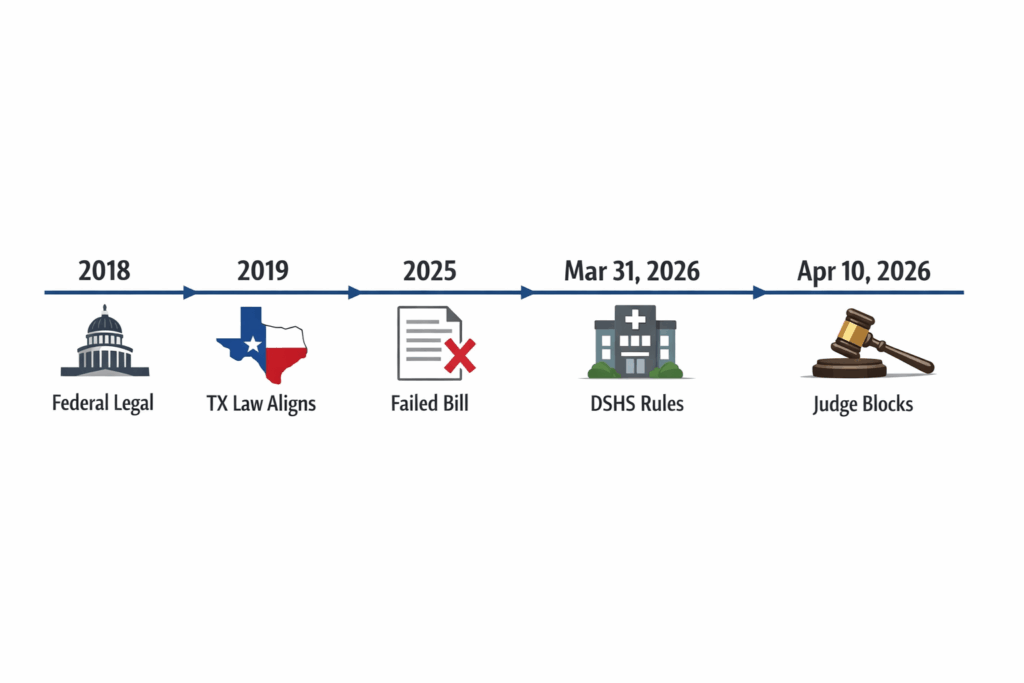
Understanding the smokable hemp ban requires looking back a few years. Here is how the situation developed.
2018: Federal Legalization of Hemp
The federal Farm Bill of 2018 opened the door by legalizing hemp nationwide, defining it as cannabis containing less than 0.3% Delta-9 THC on a dry weight basis. That single threshold created an entire market almost overnight.
2019: Texas Follows Federal Law
Texas adopted its own hemp program that mirrors the federal definition. Retail hemp shops proliferated quickly, and smokable products, especially those rich in THCA, became top sellers.
The THCA Loophole
THCA is a cannabinoid found naturally in raw hemp. In its unheated state, it carries no psychoactive effect, so it technically falls within the 0.3% Delta-9 THC legal threshold. When smoked or vaporized, however, THCA converts to Delta-9 THC through a process called decarboxylation, producing effects similar to marijuana. Lawmakers began calling this the “THCA loophole,” arguing it allowed an unregulated recreational THC market to develop without legislative approval.
2025: A Legislative Attempt Falls Short
The Texas Legislature voted to ban hemp-derived intoxicating products outright. Governor Greg Abbott vetoed that bill, Senate Bill 3, and instead directed the Texas Alcoholic Beverage Commission (TABC) and DSHS to pursue stricter regulations through agency rulemaking.
March 31, 2026: DSHS Rules Take Effect
DSHS released sweeping new regulations that went into effect on March 31. These rules established a “total THC” testing standard that counts THCA toward the 0.3% threshold, effectively banning most smokable hemp products in the state.
April 10, 2026: A Judge Steps In
A Travis County district judge granted a temporary restraining order, blocking enforcement of the smokable product ban until at least April 23, when a hearing on a longer-term injunction is scheduled.
What the DSHS Regulations Actually Changed
The March 31 rules from DSHS did more than change how THC is measured. Here is a breakdown of key provisions.
| Regulatory Change | Before March 31 | After March 31 (Paused by TRO) |
| THC Testing Method | Delta-9 THC only | Total THC including THCA |
| Smokable Hemp Flower | Permitted for sale | Prohibited under total THC rule |
| Pre-Rolled Joints | Permitted for sale | Prohibited under total THC rule |
| Retail Licensing Fee | Approx. $155 per location | Approx. $5,000 per location |
| Manufacturing License Fee | Approx. $258 per facility | Approx. $10,000 per facility |
| Interstate Sales | Permitted | Prohibited (also paused by TRO) |
| Age Restriction | Already 21+ | Codified at 21+ |
| Packaging Requirement | No mandate | Child-resistant packaging required |
Important note: The temporary restraining order paused the smokable product ban and the interstate sales restriction. The court declined to block higher licensing fees. As of the April 23rd hearing, the future of these rules remains uncertain. Business owners should monitor this situation closely.
Why the Hemp Industry Filed Suit

The lawsuit, filed by the Texas Hemp Business Council, Hemp Industry and Farmers of America, and several Texas retailers and manufacturers, raises a core constitutional argument: DSHS overstepped its authority.
Texas law defines hemp as cannabis containing less than 0.3% Delta-9 THC. That definition was set by the Legislature in 2019. The hemp industry argues that DSHS, as an administrative agency, cannot rewrite that definition by reclassifying THCA as Delta-9 THC. Doing so, they contend, changes the legal definition of a product without going through the proper legislative process.
The industry also submitted over 300 pages of testimony documenting the immediate economic harm: businesses closing, employees facing layoffs, and inventory being pulled from shelves. One industry consultant estimated the rules could displace more than 40,000 Texas workers and close more than 6,300 businesses across the state.
Attorneys for DSHS countered that the “total THC” approach aligns with an upcoming federal standard set to take effect in November 2026, and that the state moved early to prepare for federal compliance. The hemp industry responded that adopting a federal rule before it takes effect still exceeds the agency’s current authority.
The Business Impact: By the Numbers

The scope of this regulatory change is significant for the Texas hemp economy.
- More than 13,000 stores statewide are registered to sell hemp products.
- Nearly 800 companies hold hemp manufacturing licenses in Texas.
- Smokable products account for 40 to 50 percent of many stores’ total revenue.
- Retailers reported pulling 30 to 50 percent of their inventory almost immediately after the March 31 rules took effect.
- Licensing fee increases of up to 4,000% were described by industry leaders as cost-prohibitive for small operators.
For many smaller shops, the combination of losing their top-selling product category and absorbing a fee increase of this magnitude would have meant closing their doors. That economic reality was central to the judge’s decision to issue the temporary restraining order.
What This Means for Hemp Merchants and Payment Processing
Regulatory volatility in a business vertical does not just affect your shelves. It directly affects your ability to accept credit card and debit card payments.
Hemp retailers have always operated in a high-risk processing environment. Banks and payment processors assess risk based on product type, regulatory standing, and the legal landscape in which a business operates. When a state-level ban goes into effect, even temporarily, processors pay close attention.
Why Your Merchant Account May Be at Risk
Processors that serve hemp businesses monitor regulatory changes. If your product category shifts from legal to prohibited, even briefly, some processors treat that as a material change to your business profile. That can lead to account termination.
What High-Risk Merchants Should Do Now
Here are the steps hemp business owners in Texas should take amid current uncertainty.
- Document your current product lineup. Keep clear records showing which products you are currently selling and how they comply with the temporary restraining order.
- Review your merchant agreement. Understand what triggers a review or account closure. Look for language around regulatory changes in your jurisdiction.
- Talk to your ISO agent before something changes. Do not wait for a notice from your processor. Proactive communication is the best way to protect your processing relationship.
- Understand your options. AllayPay works with multiple processing partners, which can give you more flexibility if one relationship becomes strained.
- Watch the April 23 hearing. The outcome will determine whether smokable hemp sales remain protected while the full case proceeds. It could quickly reshape the regulatory landscape.
The Delta-8 Parallel: A Case Already Working Through the Courts
The smokable hemp ban is not the first time DSHS has tried to restrict a hemp-derived cannabinoid through agency action rather than legislative vote. In 2021, DSHS classified delta-8 THC as illegal, triggering a lawsuit from the hemp industry that challenged the same constitutional question: can an agency change the legal definition of hemp without legislative authority?
That delta-8 case is now before the Texas Supreme Court. The outcome is expected to significantly influence the smokable hemp lawsuit, since both cases turn on the same separation-of-powers argument. A ruling limiting DSHS’s authority in the delta-8 case would strengthen the hemp industry’s position in the current fight.
Consumer Safety: What the State Says

State officials point to real public health data to support their position. Poison control calls related to cannabis products in Texas rose from 923 in 2019, the year after hemp was federally legalized, to over 2,600 in 2025. Most of those calls involve children under five and teenagers.
Drug policy researchers note that increases in poison control calls are a common pattern following legalization of any substance, and that the data needs additional context to support firm conclusions. Still, it underscores why public officials continue to push for tighter oversight, even when the legislative path has proven difficult.
The hemp industry has largely accepted consumer-protective regulations around packaging, labeling, and age verification. Their lawsuit specifically targets the rules they view as exceeding the agency’s authority, not the safety-oriented provisions.
What Products Are Still Legal in Texas Right Now
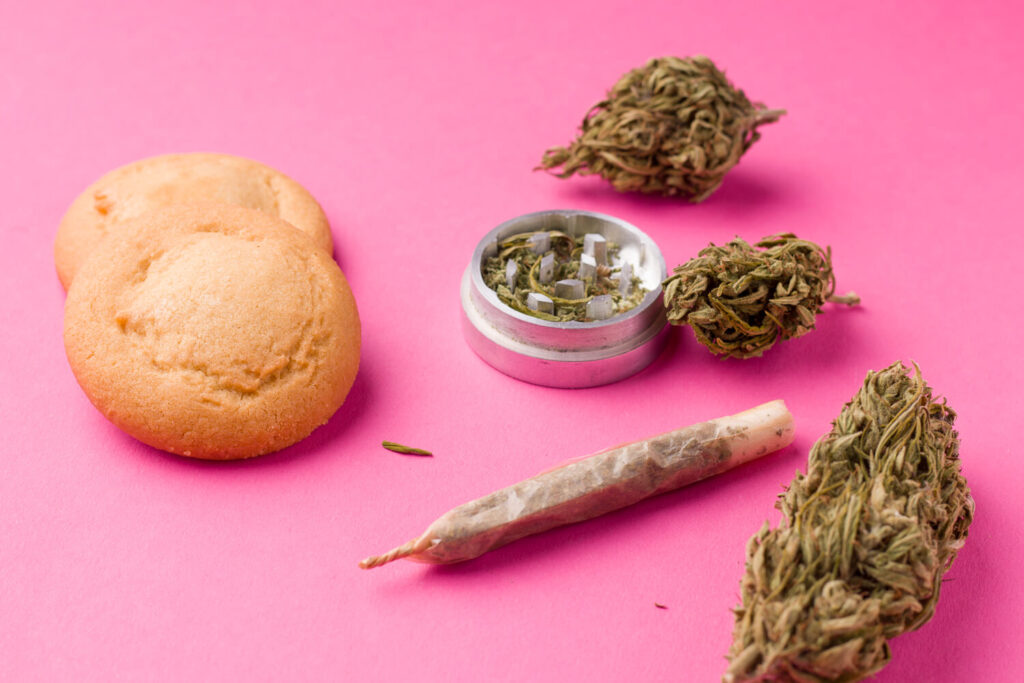
Even if the smokable hemp ban ultimately survives legal challenge, not all hemp products are affected equally.
| Product Type | Status as of April 2026 |
| Hemp flower (smokable) | Temporarily permitted under TRO (hearing April 23) |
| Pre-rolled joints (THCA) | Temporarily permitted under TRO (hearing April 23) |
| Hemp edibles | Legal, subject to updated packaging and labeling rules |
| Hemp-infused beverages | Legal, regulated by TABC |
| THCA vape products | Banned statewide since September 2025 |
| Hemp tinctures and topicals | Legal, subject to updated rules |
| CBD isolate products | Legal |
| Interstate sales of smokable hemp | Temporarily unblocked by TRO |
How AllayPay Supports High-Risk Hemp Merchants
Navigating payment processing while state regulations shift is not something you should do alone. We work alongside processing partners to find solutions that fit the specific risk profile of your business, even when that profile is complicated by regulatory uncertainty.
Hemp and CBD merchants face higher scrutiny from banks and processors by default. When you add the kind of legal volatility Texas is experiencing right now, maintaining stable payment processing becomes even more critical.
Looking for a reliable cannabis related business merchant account? Contact us today and find out how our payment processing solutions can keep your business moving forward.