










Customer Checkout

Your customer enters their payment details at checkout.

A smart payment gateway that connects your checkout to one or many processors. OpenPath routes each sale, screens it for fraud and retries declines it can recover.
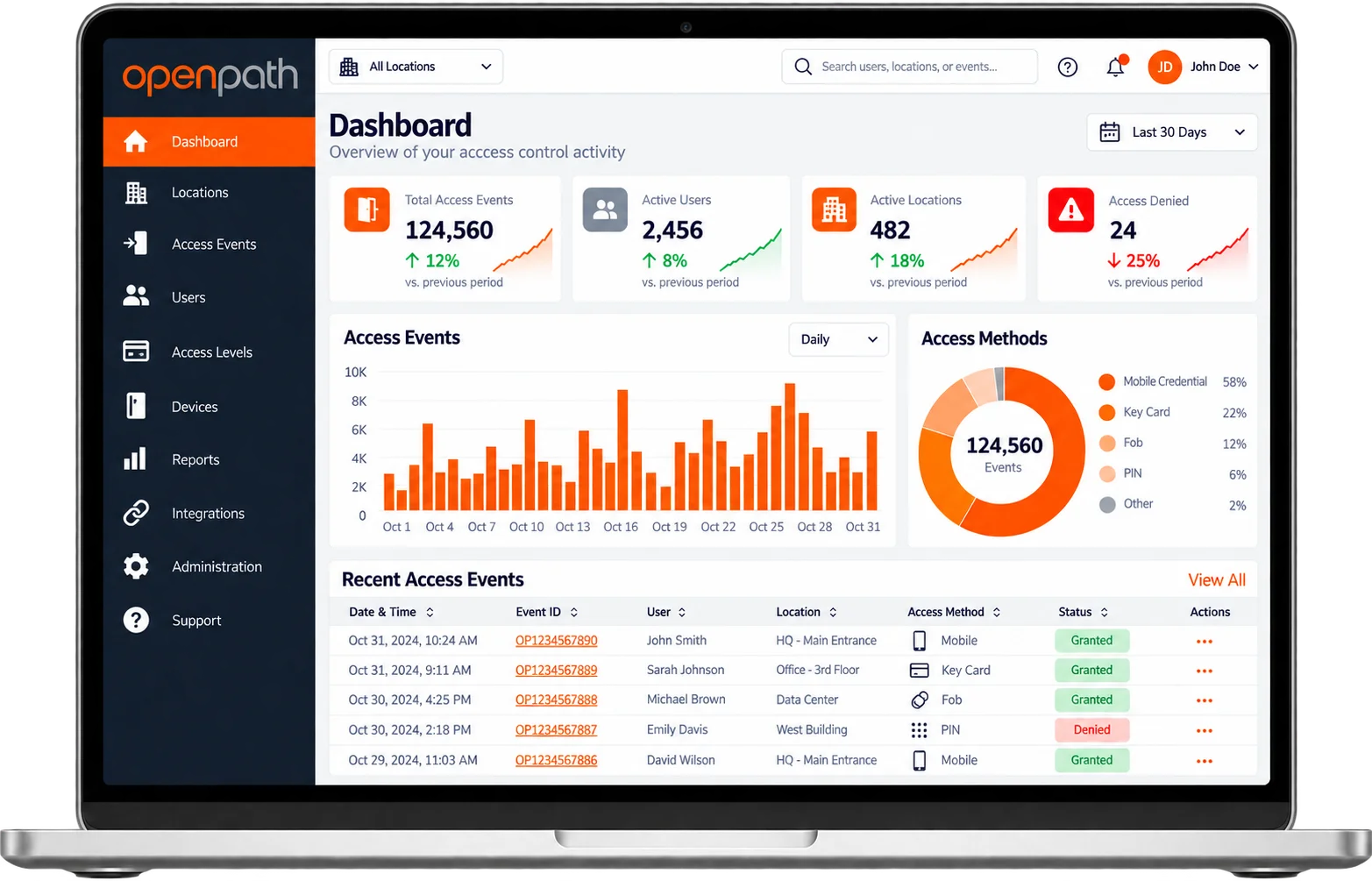
Support all major credit cards, Apple Pay and alternative payment methods through one connection.





One connection. Every processor.
Everything you need to route, protect and recover your payments.

Send each sale to the right processor based on products, currency and your own rules.

Backup MIDs take over when an account hits its limit or a processor goes offline.

Spot declines that can be saved, then retry or reroute them automatically.

Screen every transaction against more than 120 rules, including velocity and blacklist filters.

Add secure payment fields to your checkout and style them to match your brand.

Get alerts on MID caps and decline spikes, plus daily sales summaries and transaction history.
OpenPath connects through a plugin, your platform's payment menu or its API, and links to more than 200 gateways and processors.
Your customer enters their payment details at checkout.
OpenPath checks the transaction against your fraud and compliance rules.
OpenPath sends the sale to the best available processor, or to a backup if needed.
Your store gets the result, and your processor settles approved funds to your merchant account.

OpenPath lets you connect one merchant account or several to your website, shopping cart or custom checkout. You set the routing rules, and OpenPath applies them to every sale in real time.

From a single online store to a multi-MID operation, OpenPath scales with you.

Route online payments for your store across one or more processors.

Manage recurring billing and recover failed renewals.

Spread volume across multiple MIDs and keep a backup ready.

Accept online and remote payments with fraud screening on every sale.


The OpenPath payment gateway is a payment orchestration platform from OpenPath, Inc. that sits between your checkout and your payment processors. When a customer pays, OpenPath screens the transaction, selects a route and returns the result to your store in milliseconds. OpenPath connects to more than 200 gateways, processors, eWallets and alternative payment methods.
OpenPath payment orchestration runs each transaction through five steps: enrich the transaction profile, evaluate processor availability, apply fraud and compliance logic, select the highest-probability route and execute recovery or fallback if needed. Enrichment draws on customer, device, IP, card, banking and merchant-profile data. OpenPath connects to a checkout through a plugin, a payment dropdown or a custom API integration.
OpenPath is a payment gateway and orchestration platform, not a merchant account. OpenPath’s Terms of Service describe OpenPath, Inc. as a technology provider, not a bank, acquirer or merchant of record. To receive funds, you need at least one approved merchant account and processor behind OpenPath. AllayPay sets up the merchant accounts and connects them to OpenPath.
No. One approved merchant account is enough to process through OpenPath, but multi-processor routing and failover need two or more MIDs. OpenPath lets a substitute MID take over when an account reaches its limit or a processor is unavailable. Each OpenPath merchant account, primary or backup, must be approved for the products it processes. AllayPay can underwrite both the primary and the backup MIDs.
OpenPath accepts Visa, Mastercard, American Express and Discover cards, and Spreedly’s OpenPath connection processes U.S. dollar transactions for U.S. merchants. OpenPath also connects to eWallets and alternative payment methods through its gateway and processor partners. Wallet support depends on the connection: Spreedly lists Apple Pay and Google Pay as not currently available for OpenPath.
Yes. The OpenPath Transaction API accepts ACH eCheck payments when the payment type is set to check, with the account holder name, routing number, account number and an SEC code of PPD, WEB, TEL or CCD. ACH requires an ACH processor connected to OpenPath, and OpenPath’s developer docs include Seamless Chex connector guides. A single request can carry card or eCheck data, not both.
Yes. Websites can accept payments with OpenPath by choosing OpenPath from the platform’s payment menu, installing a plugin or building a custom connection with the OpenPath API. OpenPath also offers Open Payment Elements, secure hosted payment fields that you place and style inside your own checkout.
Yes. OpenPath publishes an OpenPath Payments app for Shopify and a plugin for WooCommerce, and its developer docs include integration guides for Magento / Adobe Commerce, BigCommerce, Konnektive and Checkout Champ. OpenPath works with sticky.io and Spreedly. Its Shopify app also lists FlexPay for subscription decline salvage, Midigator for chargeback management, PAAY and InterPayments as connected tools.
Yes. OpenPath lists NMI and Authorize.net among its integrated partners, along with Stripe, Shopify and WooCommerce. You can connect an NMI or Authorize.net gateway account to OpenPath and include it in your routing and failover rules. Each gateway account still needs an approved merchant account behind it.
OpenPath multi-processor routing lets you connect several gateways, processors and MIDs to one checkout. OpenPath routes each transaction by product, currency, country, card type, processor availability or other rules you set. OpenPath can also balance volume across your MIDs, as long as each account processes only the business it was approved for.
OpenPath failover processing sends the transaction to a substitute MID when a processor is unavailable or a MID reaches its cap. OpenPath can also cascade an eligible declined transaction to another processor when one is having trouble. OpenPath sends alerts on availability problems and publishes a public OpenPath Status Page for platform uptime.
Yes. OpenPath supports recurring billing for subscriptions, upsells and downsells. The first Open Elements transaction is flagged as recurring with a period such as daily, monthly or yearly, and later charges run against the card stored in the OpenPath Customer Vault. OpenPath also supports stored credentials for recurring, installment and unscheduled transactions.
Yes. OpenPath stores card details in its Customer Vault on its own servers, not on your store. The WooCommerce plugin includes a saved cards option, so returning customers can pay with a stored card at checkout.
Open Payment Elements are secure, hosted payment fields that you add to your checkout. You choose the fields you need and style them with CSS to match your site. They include input masking, autofill and inline error alerts. Because OpenPath hosts the fields, less sensitive card data passes through your own website.
Decline Recapture is an OpenPath decline recovery service that activates only when a payment is declined. OpenPath passes the failed transaction to FlexFactor for real-time evaluation; some payments are rescued with no customer action, while others show the customer a pop-up. Decline Recapture is not a credit product, and the customer signs no credit agreement. A rescued payment triggers a factoring service for that invoice, and fees apply only to rescued payments. Not every declined payment qualifies.
OpenPath screens each transaction against configurable fraud rules before it reaches your processor. Rules can approve, block, flag or send a sale to manual review based on country, city and state, bank origin, billingto-shipping match, velocity and past customer behavior. Blacklisting and velocity filters help block cardtesting attacks, and geo-fencing rules support compliance. For disputes that still occur, OpenPath connects to Midigator for chargeback management.
Yes. The OpenPath API accepts 3D Secure authentication data, including the CAVV, XID and 3DS version, on sale and authorization requests, and OpenPath works with PAAY for EMV 3DS authentication. Merchants who connect through Spreedly can use Spreedly’s 3DS2 Global flow; Spreedly does not support gateway-specific 3DS2 for OpenPath.
Yes. OpenPath’s Terms of Service, effective September 16, 2026, state that OpenPath operates as a PCI DSS Level 1 service provider for its in-scope environment. OpenPath’s developer docs link its Attestation of Compliance (AOC), so request the current AOC to confirm the validation date. Open Payment Elements hosted fields reduce the card data your application handles, but merchants still complete the PCI requirements for their own environment.
Yes. OpenPath supports refunds, partial refunds, voids, captures and partial captures. Merchants can also choose to capture payments right away or authorize them first and capture later.
Yes. OpenPath sends critical alerts on items such as MID caps, high decline percentages and processor availability problems. Its reporting also centralizes transaction activity across payment methods. OpenPath shows teams why each routing decision was made and where each transaction went.
Yes. OpenPath publishes developer guides and a Transaction API reference covering sale, authorization, capture, void, refund and validate requests, with result codes and test numbers. The developer docs also cover authentication and OAuth credentials, API IP whitelisting, webhooks and the Open Elements serverside APIs. Developers can use the API to build a custom checkout or connect OpenPath to other business systems.
Yes. High-risk merchants can use OpenPath when every merchant account behind it is approved for the business it processes. OpenPath’s Terms describe OpenPath as a technology provider, not an acquirer, and bar uses that break card-network or processor rules, so each MID is still underwritten by its acquiring bank. AllayPay underwrites high-risk merchant accounts in industries such as nutraceuticals, credit repair and research peptides. Confirm with OpenPath that your products are permitted under its Terms before routing them.
OpenPath does not publish standard gateway pricing. The OpenPath Payments app for Shopify is free to install, with additional charges billed by OpenPath, Inc. separately from the Shopify invoice, and OpenPath’s Terms set fees, minimums and billing frequency in each customer’s order form. Merchant account processing is a separate cost.
AllayPay is an ISO built for high-risk industries. We set up merchant accounts, so you hold your own MID. We also provide hardware and software integrations, from POS to payment gateways. You get payment processing specialists who stay with you after onboarding instead of a chat widget. For OpenPath, AllayPay sets up the approved primary and backup MIDs that routing and failover depend on, provides NMI and Authorize.net gateway accounts and offers chargeback monitoring.
AllayPay first reviews your products, website, processing history and how many MIDs you plan to route, then underwrites one or more U.S. merchant accounts. AllayPay offers same-day approvals for many businesses and boards U.S. merchants only. OpenPath’s developer docs describe creating a free enterprise account at client.openpath.io with text-message verification, after which you connect your approved MIDs and add the OpenPath plugin or API to your checkout.
Get Started
Tell us about your business and we'll match you with the right banking partner and the right pricing, usually within one business day.
 No long-term contracts. Cancel anytime.
Service and support at a fraction of the cost.
Dedicated U.S.-based account manager included.


