California has more tobacco rules than almost any other state, and 2026 is bringing several big changes. If you sell cigarettes, cigars, vapes, or hookah at a California shop, you must hold a tobacco license. California retailers can only get one from the state tax agency, plus any extra licenses your city or county requires. This guide walks you through every layer of the system, the new fee that takes effect July 1, 2026, and what to do about something most articles skip: getting a payment processor that will approve your tobacco shop.
What License Do You Need to Sell Tobacco in California?
Most California retailers need a Cigarette and Tobacco Products Retailer’s License issued by the California Department of Tax and Fee Administration (CDTFA). The current fee is $265 per location per year. On July 1, 2026, the state retailer fee jumps to $450 per location under Assembly Bill 573. Many cities and counties also require a separate local tobacco retailer license on top of the state license. If you wholesale, distribute, manufacture, or import tobacco, you need a different CDTFA license; each with its own fees and security requirements. We cover each one below.
Who Needs a Tobacco License in California?
You need a state tobacco license if you sell any of the following directly to consumers from a California retail location:
- Cigarettes (including roll-your-own)
- Cigars and little cigars
- Pipe tobacco and chewing tobacco
- Hookah and shisha
- Nicotine pouches
- E-cigarettes, vape pens, and pod systems
- E-liquids and vape juice (with or without nicotine)
- Vape device components, parts, and accessories sold in combination
That last point catches a lot of new retailers off guard. Since June 9, 2016, California’s definition of “tobacco product” includes electronic smoking devices, their components, and even non-nicotine vape liquids when sold separately. If you only sell standalone tobacco paraphernalia like rolling papers or empty pipes, you do not need the retailer’s license. But the moment you stock vape juice or pods, the license requirement kicks in.
You need a separate license for every retail location and every cigarette vending machine. One license does not cover multiple stores.
Businesses That Typically Need the License
- Convenience stores and gas stations
- Smoke shops and cigar lounges
- Vape shops and e-cigarette stores
- Liquor stores carrying tobacco
- Grocery and drug stores selling cigarettes
- Vending machine operators
Who Is Exempt
The state retailer license requirement does not apply to:
- Stores selling only paraphernalia (papers, pipes, lighters) without any tobacco or nicotine
- Locations also licensed for cannabis sales (state law forbids both at the same site, and AB 8 reinforces this prohibition starting January 1, 2026)
- Manufacturers, distributors, and wholesalers (they need different CDTFA licenses, covered below)
The Three Layers of California Tobacco Licensing
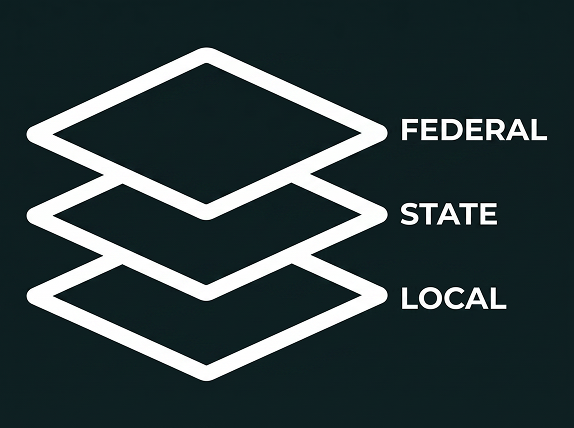
California stacks three layers of regulation on tobacco retailers, and you must comply with all three:
| Layer | Authority | What It Requires |
| Federal | FDA, ATF | Age 21 minimum sale, ID verification under 27, PMTA compliance for vapes, PACT Act registration for interstate shippers |
| State | CDTFA, CDPH | Cigarette and Tobacco Products Retailer’s License, STAKE Act compliance, flavored tobacco ban, excise tax collection |
| Local | City and county governments | Tobacco Retailer License (TRL), zoning rules, density caps, distance-from-school buffers |
Skipping any one of these layers can shut your business down. A common mistake new retailers make is getting the state license, opening up shop, and then getting cited weeks later for missing the city or county TRL.
CDTFA State Licenses Explained
The CDTFA issues four different cigarette and tobacco product licenses. The one you need depends on where you are in the supply chain.
Cigarette and Tobacco Products Retailer’s License
Most California tobacco businesses need this license.
- Current fee: $265 per retail location, paid annually
- New fee starting July 1, 2026: $450 per location, under AB 573 (the CDTFA can adjust the fee up to $600 by regulation)
- Term: 12 months from issue date
- Transferable: No, the license cannot be transferred to a new owner or new address
- Each location: A separate license is required for every store, plus a separate license per cigarette vending machine
The fee covers the cost of the license itself. You also need a Seller’s Permit before applying, which is free.
Cigarette and Tobacco Products Distributor’s License
If you buy untaxed tobacco products and pay California excise tax on behalf of retailers, you are a distributor. Distributors:
- Pay $1,200 per year per location
- Are required to post a security deposit of at least $1,000, in cash or a surety bond
- Cannot also hold a wholesaler’s license
- License runs on a calendar year (January 1 to December 31), not prorated for partial years
Cigarette and Tobacco Products Wholesaler’s License
A wholesaler buys tax-paid products and resells them to retailers. Wholesalers:
- Pay $1,200 per year per location
- Cannot also hold a distributor’s license
- No security deposit required
- Must operate at a California location (out-of-state wholesalers cannot get a license)
Manufacturer’s or Importer’s License
Anyone making tobacco products in California, or bringing finished tobacco into the state for sale, needs this license. Fees are calculated based on the administrative costs the CDTFA assesses each year. Manufacturers and importers must also:
- File monthly tax returns.
- Maintain records for four years.
- Post a Master Settlement Agreement (MSA) bond of at least $50,000 if classified as a non-participating manufacturer.
- Designate a California registered agent.
The CDPH STAKE Act: Required Rules
Many retailers think there are two state licenses, one from CDTFA and one from the California Department of Public Health (CDPH). There is only one. The CDPH does not issue tobacco licenses. The CDPH Office of Youth Tobacco Enforcement (OYTE) enforces the rules, and the rules they enforce come from the Stop Tobacco Access to Kids Enforcement Act (STAKE Act).
What the STAKE Act Requires
- No sale, gift, or transfer of tobacco products to anyone under 21
- Photo ID verification for any customer who appears under 21 (most enforcement guides say check anyone who looks under 27)
- A 1-800 warning sign posted at every point of sale, at least 5.5 inches by 5.5 inches
- Cooperation with random undercover decoy inspections by youth purchasers
STAKE Act Civil Penalties
Senate Bill 1230 raised civil penalties for selling tobacco to a minor.
| Violation | Civil Penalty | Additional Action |
| 1st violation | $1,000 to $1,500 | None |
| 2nd within 5 years | $2,000 to $3,000 | None |
| 3rd within 5 years | $5,000 to $10,000 | $250 + 45-day license suspension |
| 4th within 5 years | $15,000 minimum | $250 + 90-day license suspension |
| 5th within 5 years | $20,000 minimum | $250 + license revocation |
A revoked license is permanent. Training your cashiers on ID verification is not an option. One bad sale can put a $1,000 hole in your week. Five bad sales over five years will close your shop.
California’s Flavored Tobacco Ban Explained
California voters approved Proposition 31, upholding Senate Bill 793 by 62 to 38 percent. The law bans the retail sale of most flavored tobacco products statewide.
What Is Banned
- Menthol cigarettes
- Flavored e-cigarettes and vape juice (including any “characterizing flavor” other than tobacco)
- Flavored little cigars and cigarillos
- Flavored chewing tobacco and snus
- Tobacco product flavor enhancers
- Synthetic cooling agents that mimic menthol (closed by AB 3218 in 2024)
Limited Exemptions
State law carves out three categories that can still be sold flavored, but only by retailers with a state license:
- Loose-leaf pipe tobacco with characterizing flavors
- Premium cigars with a wholesale price of $12 or more, handmade, wrapped in whole tobacco leaf, with no filter or non-tobacco mouthpiece
- Hookah and shisha sold at locations that only admit customers 21 years of age and older at all times
Important note: many California cities (San Francisco, Sacramento, Oakland, Berkeley, Santa Cruz, Burbank, and Palo Alto, among others) have local flavor bans with no exemptions. If your shop is in one of these cities, you cannot sell flavored hookah, premium cigars, or flavored loose-leaf, even though state law allows it.
Local Tobacco Retailer Licenses: What Cities and Counties Require

State law expressly allows cities and counties to add their own tobacco retailer licensing on top of the state license. Most major California jurisdictions do, and the rules vary widely.
City of Los Angeles
- Annual permit fee: $437 per retail location
- 25% late penalty if not renewed on time
- Selling without a city permit is a misdemeanor punishable by up to six months in county jail and a $1,000 fine
- Mobile and cart sales of tobacco are not allowed; sales must be from a fixed location
- The city has more than 4,000 licensed tobacco retailers
Los Angeles County
Tobacco shops in unincorporated LA County need three licenses, not two:
- State CDTFA Cigarette and Tobacco Products Retailer’s License ($265, rising to $450)
- LA County Tobacco Retail License from Public Health: $235 per year
- LA County Tobacco Shop Business License from the Treasurer-Tax Collector: $778 for the first two years, $142 for subsequent two-year renewals
City of San Francisco
- Annual permit fee: check sf.gov for the current fee schedule
- The city caps tobacco permits at 45 per Supervisorial District, and no new permits are issued for locations not previously occupied by a permitted retailer
- San Francisco bans the retail sale of all electronic cigarettes and vape products within city limits, regardless of flavor or nicotine content. This is the strictest tobacco rule in any major California city
County of San Diego
- Annual permit fee: $730
- New tobacco retailers cannot license within 500 feet of an existing licensed tobacco retailer
- Tobacco retailing must be at a fixed location only
City of Sacramento
Sacramento requires a TRL and bans the retail sale of all flavored tobacco products with no exemptions for hookah, premium cigars, or loose-leaf pipe tobacco. All vape shops within the Sacramento city limits must hold a TRL.
City of Oakland
Oakland has a full TRL ordinance under Oakland Municipal Code Chapter 5.91 and bans flavored tobacco with no exemptions.
Common Local Rules to Watch
Local tobacco ordinances to watch out for include:
- A 1,000-foot buffer from schools
- A 500-foot buffer between tobacco retailers to prevent clustering
- Density caps like one tobacco retailer per 2,000 residents
- Pharmacy bans prevent tobacco sales at locations that also operate as a pharmacy
- Outright vape bans in cities like San Francisco, San Mateo County, and others
How to Apply for Your California Tobacco License

The CDTFA has fully digital licensing through its Online Services Portal. Plan on the application taking several weeks from start to approval, with longer timelines if your application is incomplete or your business structure is complex.
Step 1: Get Your Federal Tax ID
Apply for an Employer Identification Number (EIN) through the IRS website if you don’t already have one. It’s free and takes about 15 minutes. Sole proprietors using their Social Security Number can skip this step, but most retailers need an EIN.
Step 2: Register Your California Business Entity
If you operate as an LLC, corporation, partnership, or limited partnership, register with the California Secretary of State, Business Programs Division. You will need an active entity status before applying for a tobacco license.
Step 3: Apply for a CDTFA Seller’s Permit
Every California tobacco retailer needs a Seller’s Permit before applying for the tobacco license. Apply online at CDTFA’s Online Services Portal. The Seller’s Permit is free, and you can apply for it and the tobacco license in the same online registration session.
You will need:
- Business name and California Secretary of State entity number
- EIN or Social Security Number
- Driver’s license or state ID for owners, partners, or corporate officers
- Business address and contact information
- A bank account for tax payments
- Estimated monthly sales
Step 4: Apply for Your Cigarette and Tobacco Products Retailer’s License
In the same online portal, complete the tobacco license application. The system asks questions about your products, your suppliers, and any criminal history. You must affirm that you have not been convicted of a felony related to tobacco licensing. If you sell vapes containing nicotine, be sure to register for a California Electronic Cigarette Excise Tax (CECET) account in the same session.
Step 5: Pay the License Fee
Pay $265 per location (or $450 starting July 1, 2026). Payments are made through the portal by ACH bank transfer or credit card.
Step 6: Apply for Local Tobacco Retailer Licenses
Contact your city and county licensing offices to apply for local TRLs. Many cities require separate applications, fees, and inspections. Some require a zoning review before issuing the license.
Step 7: Display Your Licenses and Required Signs
Once approved:
- Display your CDTFA license conspicuously at each location, where customers can see it.
- Display your local TRL, if required.
- Post the STAKE Act 1-800 warning sign at every point of sale (free signs are available from the Tobacco Education Clearinghouse of California).
- Keep your Seller’s Permit posted alongside the tobacco license.
Penalties for Operating Without a License
California takes unlicensed tobacco sales seriously. Under Business and Professions Code section 22981:
Operating without a tobacco license is a misdemeanor.
- Maximum fine of $5,000 per offense
- Up to one year in county jail
- Each day of unlicensed sales counts as a separate violation.
- Product on the shelf is subject to immediate seizure.
Buying tobacco from an unlicensed wholesaler or distributor also triggers fines, license suspension, seizure of inventory, and potential jail time. Always verify your supplier’s CDTFA license number on every invoice.
Tax violations carry their own penalties. Under Revenue and Taxation Code section 30473, possessing or selling cigarettes without proper California tax stamps can result in a $25,000 fine, one year in county jail, and an additional $100 per carton penalty.
California Tobacco Taxes
California is one of the highest-taxed tobacco states in the country. Retailers should understand the full tax picture because it shapes everything from pricing to chargeback patterns.
Cigarette Excise Tax
- State cigarette tax: $2.87 per pack of 20 (set by Proposition 56 in 2016, effective April 1, 2017)
- Federal cigarette tax: approximately $1.01 per pack of 20 (under Internal Revenue Code section 5701)
- Total tax burden on a pack of cigarettes in California: nearly $4.00 before sales tax
Other Tobacco Products (OTP) Tax
The CDTFA recalculates the OTP tax rate every year on April 1, based on cigarette wholesale price changes. For fiscal year 2025-26, the rate is 54.27 percent of wholesale cost. This applies to cigars, pipe tobacco, chewing tobacco, snus, and most non-cigarette tobacco. Check CDTFA’s current rate before adjusting your prices each spring.
California Electronic Cigarette Excise Tax (CECET)
Effective July 1, 2022, California imposes an additional 12.5 percent excise tax on the retail selling price of nicotine-containing electronic cigarettes. Retailers collect the tax at the point of sale and remit quarterly to CDTFA. Retailers retain 1% as a collection reimbursement.
Sales Tax
Standard California state sales tax (7.25 percent) plus local district taxes apply on top of all the above.
PACT Act and Online Tobacco Sales

If you ship tobacco or vape products across state lines, you fall under the federal Prevent All Cigarette Trafficking (PACT) Act. The 2020 amendment added e-cigarettes and vape products. PACT Act compliance requires:
- Registration with the federal Bureau of Alcohol, Tobacco, Firearms, and Explosives (ATF) using Form 5070.1
- Registration with the tax administrator of every state you ship to
- Monthly sales reports to ATF and each destination state
- Adult signature (age 21+) on delivery
- Compliance with every destination state’s tobacco tax laws
Major shipping carriers like the U.S. Postal Service, UPS, and FedEx have ended consumer tobacco shipments. Only unflavored tobacco can legally be shipped to California, and only by sellers holding the proper CDTFA distributor and CECET registrations.
Card Brand Registration Fees for Online Tobacco Sales
If you sell tobacco online, the major card brands make you register your business before you can accept any card payment. Your payment processor handles the registration. The card brands use it to track tobacco sales across the internet. You renew it every year, and each brand charges its own fee.
Here is what the major card brands charge:
- Visa: $950 per year
- Mastercard: $500 per year
Visa also runs a program called the Visa Integrity Risk Program, or VIRP, for high-risk businesses like tobacco. VIRP adds 10 cents to every transaction plus 10 basis points on the total amount you process. Your payment processor adds these fees to your monthly statement.
Two things to note:
- These fees only apply to online sales and mail-order or phone-order (MOTO) sales. If you only swipe cards at a counter, you do not need to register.
- Many processors scan your website on a regular basis to make sure your age check, PACT Act notices, and California compliance language are still in place. If any of that drops off, your registration can be pulled, and your account can be closed.
Why Tobacco Retailers Struggle to Get Approved for Payment Processing

This is the part most California tobacco license guides leave out. Getting a license is half the battle. The other half is finding a payment processor that will approve your business and keep your account open through inspections, chargebacks, and shipping changes.
Tobacco Is Classified as High-Risk
Card networks and acquiring banks classify tobacco retailers as high-risk merchants, primarily under Merchant Category Code 5993 (Cigar Stores and Stands). Some vape-only shops fall under MCC 5999. This classification means:
- Higher reserves and slower funding
- More documentation during underwriting
- Stricter chargeback rules
- Greater risk of account termination if rules change
Mainstream Payment Processors Prohibit Tobacco
Many of the most advertised online payment processors do not accept tobacco merchants. Their published acceptable use policies restrict or prohibit cigarette sales, vape sales, or both. Retailers who try to set up tobacco shops on these platforms can have their accounts terminated within days of the first transaction, often with funds held for months.
This is not a bug. Mainstream processors are designed for low-risk e-commerce, and tobacco does not fit that profile. Retailers need a processor that knows tobacco and underwrites it properly from the start.
What Goes Wrong Without a Tobacco-Friendly Processor
Common problems we hear from California tobacco retailers:
- Account terminated after the first chargeback.
- Funds held for 90 to 180 days.
- Customer payments were rejected at checkout.
- Forced reapplication at the worst time, like the holiday rush.
- Inability to integrate age verification at the cart.
What AllayPay Does for High-Risk Tobacco Merchants
We partner with multiple acquiring banks that underwrite tobacco merchants. Our role is to:
- Match your business with a processor that already approves MCC 5993 for merchants.
- Handle the underwriting paperwork and reduce your time to approval.
- Set up age verification and PACT-compliant checkout for online sales.
- Provide ongoing chargeback support to prevent a single dispute from closing your account.
- Keep your account open through inspections, ownership changes, and product mix shifts.
Stay Compliant and Keep Growing with AllayPay
If you operate a California tobacco shop, vape store, or hookah lounge, you already know how strict the rules are. You shouldn’t have to fight your payment processor to get the service you deserve. Our team of agents specializes in tobacco and cigar merchant services, vape and e-cig payment processing, hookah lounge processing, and CBD for retailers across California and the rest of the country.
We connect you with payment processors who understand tobacco compliance, MCC 5993 underwriting, and the realities of operating in a state with the country’s strictest tobacco rules. Contact us today to learn how our agents can help you accept payments safely while staying compliant with every layer of California tobacco law.