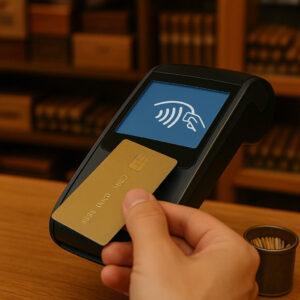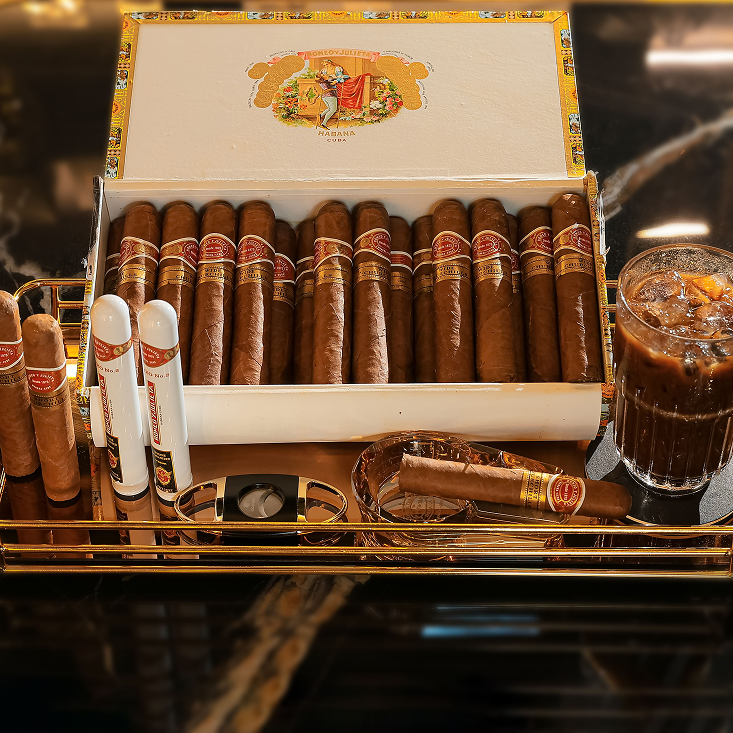
If you’re a merchant selling cigars online, you already know that accepting credit card payments isn’t as simple as signing up with Stripe or PayPal. Most mainstream payment companies will not approve an online payments for cigar businesses, and those that do may terminate the account later during a routine review. That leaves cigar merchants stuck, sometimes mid-sale, without a way to collect payment from their customers. This guide covers what a cigar merchant account is, why you need one, the approval process, and how to set your business up for success.
Why Online Cigar Sales Need a Specialized Cigar Merchant Account

Banks and card networks classify cigar sales as high risk. Several factors drive that classification.
- Cigars are age-restricted products, which means sellers are required to verify that every buyer meets the legal purchase age.
- Online transactions carry higher chargeback exposure than in-person sales because the physical card is never present at checkout.
- Federal and state tobacco regulations add layers of compliance that most standard processors are not equipped to manage.
Because of these factors, many well-known payment platforms prohibit cigar merchants. Even when a cigar business slips through an initial approval, the account may be closed during a later compliance audit. A dedicated cigar merchant account, fully underwritten by a bank that understands tobacco commerce, avoids these disruptions and gives your business a stable foundation for growth.
What Is a Cigar Merchant Account?

A cigar merchant account is a payment processing account specifically underwritten to support cigar and tobacco retailers. Unlike payment aggregators that bundle merchants together under a single master account, a dedicated cigar merchant account is individually reviewed and approved. This means the underwriting bank has already assessed your business model, product line, and compliance posture before granting approval. The result is a lower likelihood of surprise account termination down the road.
With an approved cigar merchant account, your online store can accept major credit and debit card brands. It is important to understand that a cigar merchant account covers cigars and traditional tobacco products only. If you plan to sell vape and e-cigarettes, or any other products alongside cigars, let our team know so we can structure the right accounts for your full product catalog.
Common Reasons Cigar Merchant Account Applications Get Declined

Most application denials are tied to compliance issues rather than the product itself. Underwriters want transparency, and missing information raises red flags. The most frequent causes of declined cigar merchant account applications include:
- Incomplete or missing age-verification language on the website,
- Absent refund, shipping, or privacy policies
- Unclear product sourcing or fulfillment details
- Requesting unrealistically high transaction limits
Another issue that catches many cigar sellers off guard is the changing regulatory landscape at the state and local levels. Some jurisdictions have introduced new restrictions on shipping cigars and tobacco products directly to consumers. Merchants who are unaware of these changes risk card brand fines. Underwriters pay close attention to whether an applicant has documented risk controls in place and demonstrates awareness of the rules that govern their specific market.
Business and Website Requirements for a Cigar Merchant Account

Getting your business and website organized before you submit an application saves time and improves your chances of a fast approval. Processors review both the legal standing of your company and the customer-facing content on your website.
Business Documentation
At a minimum, you will need a registered legal entity (LLC, corporation, or equivalent) and an active business bank account. Most processors also request:
- A government-issued photo ID for the business owner
- A voided check or bank verification letter
- A valid tobacco or cigar license if required by your jurisdiction
- Your most recent three months of business bank statements
If you have previously accepted card payments, expect to provide three months of processing statements as well
Compliance Preparation
Beyond documentation, processors confirm that your business maintains:
- Age-verification controls on the website
- Holds valid licensing in every jurisdiction where it sells
- Screens orders for restricted or illegal activity
- Follows all applicable federal and state tobacco regulations.
Because online cigar sales are card-not-present (CNP) transactions, meaning the physical card is never swiped, dipped, or tapped; additional compliance steps apply compared to in-store retail tobacco sales.
PACT Act Shipping Compliance
The Prevent All Cigarette Trafficking (PACT) Act is a federal law originally passed in 2010 and amended in 2021 that regulates the interstate sale and shipment of tobacco products. While the PACT Act primarily targets cigarettes, smokeless tobacco, and Electronic Nicotine Delivery Systems (ENDS), online cigar sellers are still affected by its broader requirements.
Processors will verify that you have enabled proper shipping restrictions, require adult-signature delivery for all orders, and do not use USPS to ship tobacco products. Violations of the PACT Act can result in significant fines, criminal penalties, and placement on the ATF noncompliant list, which would effectively end your ability to process payments.
Website Content Checklist
Your website must clearly display a Terms and Conditions page, a Privacy Policy, a Refund and Return Policy, a Shipping Policy, and a prominent age-restriction notice stating that buyers must be 21 or older to purchase. Most processors also require a disclosure about adult-signature delivery. These pages should be easy to find from your homepage, ideally linked in both the header and the footer.
State Shipping Restrictions for Online Cigar Sales
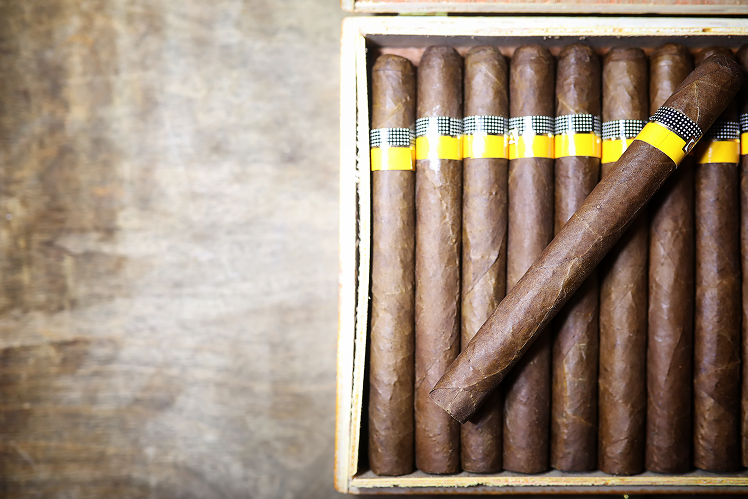
Shipping laws for tobacco products vary significantly from state to state and even at the local level. Some jurisdictions restrict or outright ban direct-to-consumer delivery of cigars and other tobacco products. While your payment processor does not enforce shipping laws directly, underwriters review whether your business limits sales in restricted areas, discloses shipping restrictions on your website, and uses adult-signature delivery where required. Demonstrating this level of compliance awareness during the application process builds confidence with the underwriting team and speeds up approval.
Federal Compliance Considerations for Cigar Merchants

Federal tobacco regulation is primarily governed by the PACT Act and enforced by the Bureau of Alcohol, Tobacco, Firearms, and Explosives (ATF). The PACT Act focuses heavily on cigarettes, smokeless tobacco, and ENDS products. Premium cigars generally receive different treatment under these rules, though certain products marketed as “little cigars” may fall under stricter regulatory interpretations, since some states classify little cigars as cigarettes for tax purposes.
Online cigar sellers are mostly affected by state tobacco tax obligations, age-verification requirements at both purchase and delivery, adult-signature delivery mandates, and reporting and registration rules that differ by jurisdiction. Payment processors evaluate whether a merchant understands these obligations and operates within them. Working with an experienced merchant service provider, like AllayPay, helps you identify gaps in your compliance setup before they become reasons for a denial.
Age Verification Requirements for Online Cigar Merchant Accounts

Age verification is mandatory for any business selling cigars online. Processors and card brands expect cigar merchants to implement multiple layers of verification. Common methods include:
- An age confirmation checkbox combined with a date-of-birth entry field at checkout,
- Integration with a third-party age-verification service that cross-references buyer information against government databases
- Adult signature delivery that confirms the recipient is 21 or older when the package arrives.
Adult-signature delivery is widely considered a best-practice risk control, and many processors strongly prefer or require it, especially for shipments that cross state lines.
What Does a Cigar Merchant Account Cost?

Processing costs for cigar merchant accounts depend on several variables, including your monthly transaction volume, the mix of card types your customers use, and your overall risk profile. Because cigars are classified as high risk, rates and fees will be higher than what a standard retail business pays.
Costs typically include a per-transaction processing rate, a monthly account or gateway fee, per-transaction authorization fees, and, in some cases, a rolling reserve where the processor holds back a percentage of your deposits for a set period to cover potential chargebacks.
Card Brand Registration Fees for Online Tobacco Sales
Online cigar merchants who process card-not-present transactions are required to register with a major card brand for tobacco sales. These registrations allow the card networks to monitor compliance across all nicotine-related eCommerce. Registration is an annual requirement, and each card brand charges its own fee. Visa, Mastercard, and American Express each have registration programs with associated costs, while Discover does not currently charge a separate tobacco registration fee.
Credit card processors collect these fees from merchants to maintain the accounts. Visa charges $950 annually, and Mastercard charges $500 annually per acquiring provider. In addition, Visa Integrity Risk Program (VIRP) charges an additional 10 cents per transaction and 10 basis points on volume processed.
These registration requirements generally apply only to eCommerce and mail-order/telephone-order (MOTO) accounts, not to retail card-present transactions. Some processors may also run periodic scans of your website to confirm that age-verification tools and regulatory disclosures remain active.
Ways to Reduce Your Processing Costs
Cigar merchants have options for bringing down their payment processing expenses. Two of the most popular approaches are surcharging and dual pricing programs. Surcharging passes the cost of credit card processing to the customer who pays by credit card. Dual pricing displays separate cash and card prices at checkout. Both models are compliant in most states when implemented correctly, and they can significantly offset the higher rates associated with high-risk processing.
Best Payment Methods for Online Cigar Stores

Credit and debit cards remain the primary payment method for online cigar sales. They offer the widest customer reach and integrate seamlessly with most eCommerce platforms. For wholesalers or merchants processing larger orders, they are an excellent alternative that typically carries lower per-transaction fees than card payments. Offering both card and ACH solutions gives your customers flexibility and can help you manage costs more effectively.
How Long Does It Take to Get Approved for a Cigar Merchant Account?

Most cigar merchant account applications are approved within one to two business days, provided your documentation is complete, and your website meets compliance standards. The majority of delays stem from incomplete paperwork or compliance gaps on the merchant’s end, such as missing policy pages or an unclear product description. Preparing everything in advance, including your business documents, website content, and realistic processing volume estimates, is the single best way to speed up the timeline.
How to Choose the Right Cigar Payment Processor

Not all high-risk processors are created equally. When evaluating providers, look for a company with direct experience in tobacco and regulated industries, clear underwriting guidelines that are communicated up front, transparent contract terms with no hidden fees, and a dedicated support team that understands your industry. Avoid any provider that promises guaranteed approval without first reviewing your business. That kind of promise is a red flag, and it often leads to unstable accounts that get terminated without warning.
How to Apply for a Cigar Merchant Account

Follow these steps to get your cigar merchant account application underway.
- Prepare your website with all required compliance pages, including Terms and Conditions, Privacy Policy, Refund Policy, Shipping Policy, and an age-restriction notice.
- Gather your business and banking documents, government-issued ID, voided check or bank letter, tobacco license, and recent bank and processing statements.
- Submit accurate monthly processing volume estimates. Overstating or understating volume creates underwriting concerns.
- Complete the underwriting review. Respond quickly to any follow-up questions from the processor to avoid delays.
How AllayPay Helps Cigar Merchants Get Approved
We work with acquiring banks experienced in high-risk and regulated industries, including online cigar sales. Our team guides you through underwriting requirements, helps you identify and resolve compliance gaps before they cause problems, and connects your business with payment gateway integration for your website. We do not process payments directly. Instead, we align your cigar business with the processing solutions designed for regulated eCommerce, so you can operate with stability and transparency from day one.
Many of our cigar merchant clients process significant volume each year and trust us with their livelihoods. If you need reliable payment processing for your online cigar business, contact us today. Our expert agents are ready to help you accept payments safely and securely.
Frequently Asked Questions
What is a cigar merchant account?
A cigar merchant account is a specialized, fully underwritten payment processing account that allows businesses selling cigars to accept credit and debit card payments. Because cigars are classified as high risk by banks and card networks, these accounts are set up through processors experienced in regulated tobacco commerce.
Why are cigar businesses considered high risk?
Cigars carry a high-risk classification because of age-restriction requirements, higher chargeback rates associated with online sales, complex federal and state tobacco regulations, and reputational concerns that make many traditional banks and processors unwilling to support the industry.
Can I sell cigars online with Stripe or PayPal?
Most mainstream payment aggregators, including Stripe and PayPal, prohibit online cigar sales in their terms of service. Even merchants who initially process through these platforms often have their accounts terminated later, sometimes after years of clean processing history. A dedicated high-risk merchant account is the stable alternative.
Does the PACT Act apply to online cigar sales?
The PACT Act primarily targets cigarettes, smokeless tobacco, and ENDS (vaping) products. Premium cigars are generally treated differently. However, online cigar sellers must still comply with state tobacco tax obligations, age-verification mandates, adult-signature delivery requirements, and restrictions on using USPS for tobacco shipments. Some “little cigars” may fall under stricter PACT Act interpretations depending on regulatory classification.
How long does it take to get approved for a cigar merchant account?
Approval typically takes one to two business days when your documentation and website are complete. Delays usually result from missing paperwork, absent compliance pages on your site, or unrealistic processing volume estimates.
What documents do I need to apply?
You will need a government-issued photo ID, a voided check or bank verification letter, a valid tobacco license (if required by your jurisdiction), three months of business bank statements, and three months of processing statements if you have prior card-acceptance history.
Are cigar merchant accounts legal in the United States?
Yes. Cigars are legal to sell online when merchants comply with all applicable federal and state regulations. A cigar merchant account simply provides the payment infrastructure to accept card payments for legal cigar transactions.
Can a new cigar business get approved for a merchant account?
Yes. New businesses can get approved with proper documentation, a compliant website, and realistic processing estimates. Some processors may require a rolling reserve for newer merchants to offset the higher perceived risk of an unproven account.
What are card brand registration fees for online tobacco sales?
Visa, Mastercard, and American Express each require annual registration for merchants processing card-not-present tobacco transactions. Each brand has its own fee structure. Discover does not currently charge a separate tobacco registration fee. These fees apply to online and MOTO sales, not in-store transactions.
What is a rolling reserve, and will I need one?
A rolling reserve is when the processor holds back a percentage of your sales deposits for a set period, typically several months, as a safeguard against chargebacks and fraud losses. Rolling reserves are more common for new businesses, merchants with limited processing history, or those in higher-risk categories. Not every cigar merchant will face this requirement.
How can I reduce my cigar processing costs?
Two popular strategies are surcharging, which passes the credit card processing fee to the customer paying by credit card, and dual pricing, which displays separate cash and card prices at checkout. Both approaches are compliant in most states and can significantly lower your net processing expenses.
What happens if my cigar merchant account gets terminated?
If a processor closes your account, your business name may be added to the MATCH list (Member Alert to Control High-Risk Merchants), which makes it harder to open a new account with another provider. Working with us from the start helps you avoid the compliance missteps that lead to termination.